Where Your Treasure Rests
If I say the word “stewardship,” what comes to mind for you? Perhaps, if we’re being honest, there’s a bit of a sinking feeling—“Oh no, it’s that time of year again.” A stewardship sermon. You’ve heard it before, you already do what you do and give what you give, and a little voice inside might say, Time to zone out, wake me up when this is over…
But Jesus had a lot to say about stewardship, one way or another, including today’s gospel reading with the parable of the abundant harvest. So, here we go! Hold onto your seats for another exciting sermon on stewardship!
But what is it anyway? Stewardship? It’s not a word we use much in our everyday lives, so your thoughts have probably already gone to churchy things. Perhaps the annual giving campaign and pledge drives. Maybe one of Jesus’ parables. Or maybe your brain goes off in a different direction. If you ask me to think of stewardship, I might well start talking about Denethor in The Lord of the Rings - the Steward of Gondor, caretaker of the realm in the absence of the King.
So what is it to you? Maybe you think of looking after something entrusted to you: supervising, caretaking, bearing responsibility. Perhaps you associate it with the idea of a gift of trust. It is all of those things, but for Jesus, it’s so important because it’s also about where we place our hope, and where we find security.
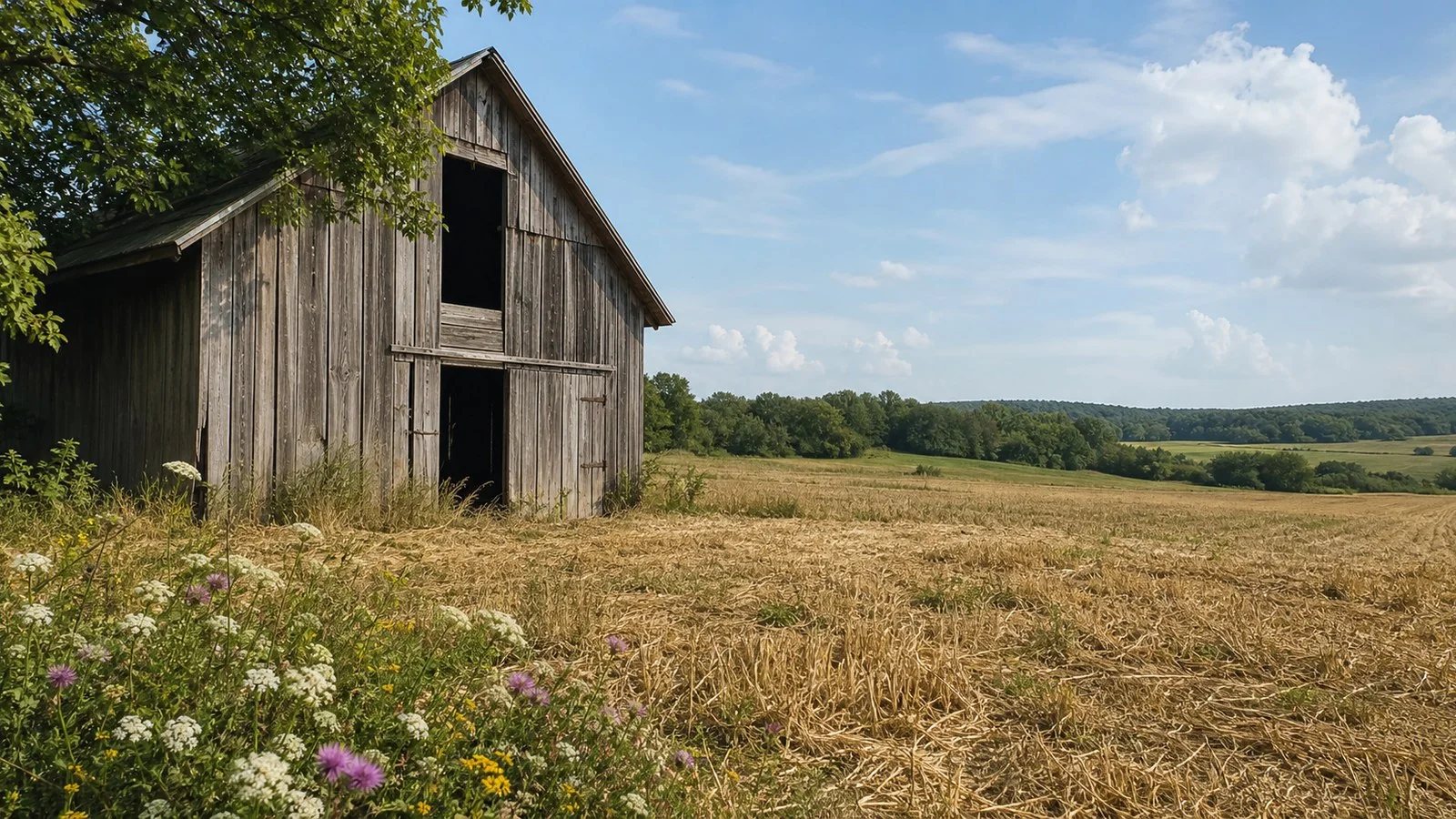
In today’s Gospel, we hear a parable about a man who has a very good problem. His land has produced abundantly—so much so that he has nowhere to store it all. So he thinks to himself, ‘I’ll build bigger barns where I can store all my riches. Then I can relax. I’ll be secure. I’ll eat, drink, and be merry.’
To our ears, if we step back for a minute, does that really sound terribly unreasonable? Many of us have, or hope to have, retirement or savings accounts. We plan ahead. We try to provide for ourselves. We’re told this is the wise thing to do. So why is Jesus so harsh? Why does God call this man a fool? Now Jesus doesn’t criticize the man for being successful or for working hard. But his failure is that his success becomes his security. He becomes totally self-oriented and forgets where the abundance came from. There is no thanks or praise to God. There’s no thought of sharing or giving. He forgets his neighbor. He forgets God.
So in Jesus’ parable God calls this man a fool, because he’s lost sight of the bigger picture. He has narrowed in on a self-reliance and self-sufficiency that leaves no room for acknowledging the fact that all good things we have are a short term gift.
Now again, that’s not to say that productivity is bad. In fact, Jesus also tells parables like the one about the talents, where those who manage their resources well and create more are praised, and held up as good examples. But it’s always about our attitude, about how we walk through this world and the impact we have. What’s the ripple effect of you and your way of being, your way of utilising all that we have at our disposal?
Driving home the other day I was behind a car that looked expensive - I don’t know cars at all, but I can still tell when it looks fancy - and this one had the personalised plate that read ‘earned this’. For a minute I wondered what kind of psychological mindset you’d need to have to put that plate on your fancy car, it seems a little defensive! But then I thought, well, hooray for you, you earned your nice car and you’re clearly very proud of it. But is that what life is about? What does that kind of stewardship say about priorities and what you value?
Denethor, the Steward of the kingdom of Gondor, was similar in some ways to the man in the parable. He forgot that he was holding something in trust, that his responsibility was, at the end of the day, to let go of what he had for the good of others. He anchored his security in his sense of control, in his sense of self-reliance. And when the king returned, Denethor didn’t cope very well. He held on too tightly, and wasn’t able to let go when he needed to.
I wonder if any of that feels familiar to you. Probably not in terms of looking after a whole kingdom, but perhaps the sense of worry, of wanting to hold on tightly to everything you have. It’s a very natural response to fear losing the things that make us feel safe in this world, but it’s so important that we are able to hold lightly instead of with a white-knuckle grip. Because our security is ultimately in our faith, in our being a child of God. And God said something at some point about loving our neighbour as ourselves, which I’m pretty sure also translates into using our gifts in a broader sense than just taking care of number 1.
And stewardship is about so much more than money. While finances are a tangible and powerful gift that we can use to make a lot of difference, our call to good stewardship is broader. Again, it comes back to attitude and values. What is your legacy of character and faith? What kind of impact do you make? Is your licence plate ‘earned this’ or is there humility and grace overflowing into generosity?
Everything we have—our wealth, our leadership, our lives—is a gift. Entrusted to us, yes. But not owned by us. And ultimately, it is meant to be given back. You may well already be a good steward, but it’s always worth revisiting our souls, and asking ourselves, how am I curating my time, my energy, my finances, my values and priorities, at this point of my life? What really matters to me, and is it something that really matters to God? Checking in with ourselves is a good thing to do regularly, and stewardship is a great overall lens to look at our lives through.
When we understand ourselves as good stewards, it changes everything. It invites us to live with gratitude. It prompts us to give with joy. It grounds us in something far more secure than any new barn or investment plan. To be a Christian is great freedom, in this way. It allows us to let go, to live faithfully, generously, and with trust. When Jesus speaks of being “rich toward God,” he’s inviting us into this life that holds things lightly.
So in thinking about stewardship, we are invited to orient our lives not around scarcity or the pressure of self-reliance, but around great abundance of all God has given. And whatever it looks like for us, our stewardship is part of God’s great work in the world, a work of being Christ to one another.
This is our question to revisit that Jesus invites us to ponder. What parable would you feature in? Do we rely on God with great joy and with great generosity? What kind of steward are you?
Amen. Jesús tenía mucho que decir sobre la mayordomía, incluyendo el evangelio de hoy con la parábola de la cosecha abundante. Pero, ¿qué es la mayordomía? Quizás piensas en cuidar algo que te ha sido confiado: supervisar, velar, asumir responsabilidad. Tal vez lo asocias con la idea de un regalo de confianza. Todo eso es cierto, pero para Jesús, la mayordomía es tan importante porque también tiene que ver con dónde ponemos nuestra esperanza, y en qué encontramos seguridad.
En el evangelio de hoy, escuchamos una parábola sobre un hombre que tiene un problema bastante bueno. Su tierra ha producido con tanta abundancia que no tiene dónde guardar todo. Así que piensa: “Voy a construir graneros más grandes donde pueda almacenar toda mi riqueza. Luego podré descansar. Estaré seguro. Comeré, beberé y disfrutaré de la vida.”
Y para nosotros, ¿eso suena tan irracional? Muchos de nosotros tenemos, o esperamos tener, planes de jubilación o cuentas de ahorro. Planeamos con anticipación. Tratamos de proveer para nuestro futuro. Se nos dice que eso es lo sabio. Entonces, ¿por qué Jesús es tan duro? ¿Por qué Dios llama necio a este hombre?
Jesús no critica al hombre por tener éxito o por trabajar duro. Su error está en que su éxito se convierte en su seguridad. Se vuelve completamente centrado en sí mismo y se olvida de dónde vino la abundancia. No hay agradecimiento ni alabanza a Dios. No piensa en compartir ni en dar. Se olvida de su prójimo. Se olvida de Dios.
Entonces, en la parábola, Dios llama necio a este hombre porque ha perdido de vista el panorama completo. Se ha aferrado a una autosuficiencia que no deja espacio para reconocer que todo lo bueno que tenemos es un regalo pasajero.
Ahora bien, eso no significa que la productividad sea mala. De hecho, Jesús también cuenta parábolas como la de los talentos, donde se elogia a quienes manejan bien sus recursos y generan más. Pero siempre se trata de la actitud, de cómo caminamos por este mundo y del impacto que generamos. ¿Cuál es el efecto dominó de tu manera de ser, de cómo usas todo lo que tienes a tu disposición?
El otro día, manejando hacia casa, iba detrás de un auto que se veía caro —yo no sé nada de autos, pero igual se notaba que era lujoso— y tenía una matrícula personalizada que decía “me lo gané”. Por un momento me pregunté qué tipo de mentalidad hay que tener para poner eso en tu auto caro. ¡Suena un poco a la defensiva! Pero después pensé: bueno, bien por esa persona, se ganó su auto y claramente está orgullosa de eso. Pero, ¿eso es lo que realmente importa en la vida? ¿Qué dice ese tipo de mayordomía sobre las prioridades y sobre lo que valoramos?
Y la mayordomía es mucho más que dinero. Si bien las finanzas son un regalo tangible y poderoso que podemos usar para marcar una gran diferencia, nuestro llamado a ser buenos mayordomos es más amplio. Vuelve a la actitud y a los valores. ¿Cuál es tu legado de carácter y de fe? ¿Qué tipo de impacto generas? ¿Tu matrícula dice “me lo gané” o hay humildad y gracia que se desbordan en generosidad?
Todo lo que tenemos es un regalo. Se nos ha confiado, pero no nos pertenece. Y, al final, está destinado a ser devuelto. Tal vez ya eres un buen mayordomo, pero siempre vale la pena mirar dentro del alma y preguntarnos: ¿Cómo estoy administrando mi tiempo, mi energía, mis finanzas, mis valores y prioridades, en este momento de mi vida? ¿Qué es lo que realmente me importa? ¿Y es eso algo que realmente le importa a Dios?
Cuando nos entendemos como buenos mayordomos, eso lo cambia todo. Nos invita a vivir con gratitud. Nos impulsa a dar con alegría. Ser cristiano es una gran libertad, en este sentido. Nos permite soltar, vivir con fidelidad, con generosidad y con confianza.
Sea como sea que se vea en nuestra vida, nuestra mayordomía es parte de la gran obra de Dios en el mundo, una obra de ser como Cristo los unos para los otros.
Esta es la pregunta que Jesús nos invita a reflexionar: Entonces, ¿qué tipo de mayordomo eres tú?
Amén.
Colossians 3:1-11; Luke 12:13-21